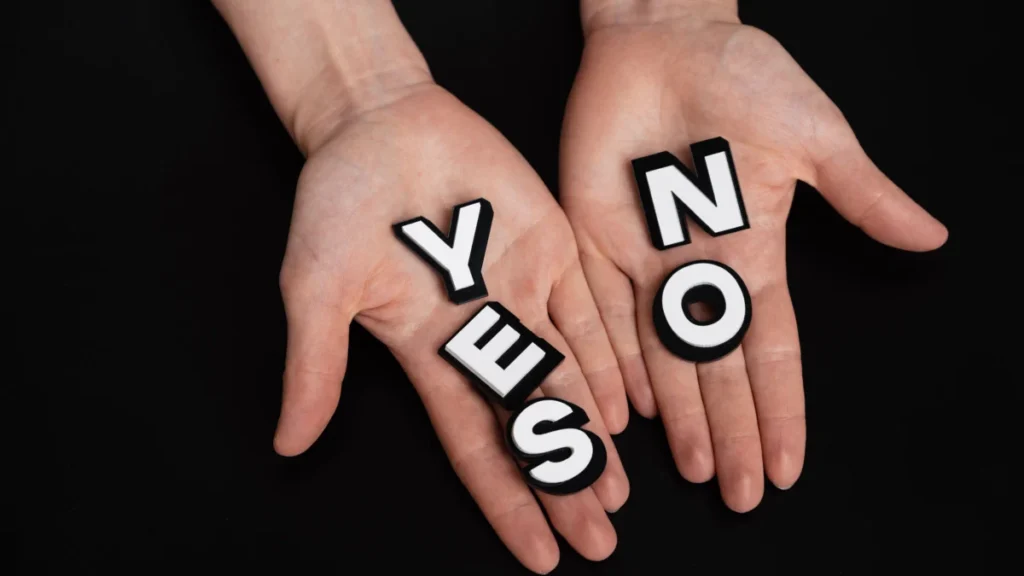
You feel guilty when you say no because, somewhere inside, no does not feel like a simple boundary. It feels like danger, rejection, disappointment, or the risk of losing love. For many people, the guilt is not proof they are doing something wrong. It is the feeling of doing something new.
A client once said to me, “I know I don’t want to do it, but the moment I say no, my stomach drops, and I feel like I’ve done something wrong.” She was exhausted, and on the outside her life looked completely normal. She had taken early retirement, but instead of having more time for herself, it felt like she had even less. She was available for her sister whenever babysitting was needed. She was expected to visit her mum almost every day for doctor’s appointments, cooking, and helping around the house. Then there was her husband, the children, and the weekends, which never really felt like rest.
You see, this is how it often looks. Nothing dramatic. Just one request after another, each one sounding reasonable on its own. But when she tried to say no to her sister, the guilt came immediately. She could already hear the response in her mind, “We have to support each other. We can’t be selfish.” So even before anyone said anything, her chest was tight, her stomach had dropped, and she felt like the bad one.
That is what makes this so painful. The hardest part is not always the doing. It is the guilt that comes after you try to stop.
When no feels unsafe
For many people, this starts long before adulthood. Somewhere along the way, you may have learned that being a good child meant being agreeable, helpful, easy, respectful. Maybe saying no was met with disapproval. Maybe it upset someone. Maybe it made a grown-up withdraw, criticise, or act hurt.
Try to understand, your nervous system remembers that. So now, when you say no to something small, your body can react as if something much bigger is happening. Your chest tightens. Your throat closes. Your stomach turns. You feel the inner alarm before your mind has even caught up.
That reaction does not always mean you are being unkind. Very often, it means a boundary is brushing up against an old fear. A helpful question to sit with is this: What do I believe will happen if I disappoint this person? Sometimes the answer is surprisingly young. They will be upset with me. They will think I am selfish. They will stop loving me. They will leave.
The moment you can hear the fear clearly, something starts to soften. You realise you are not only reacting to this moment. You are reacting to many older moments too.
Why guilt can show up even when your no is healthy
A lot of people assume guilt means they have done something wrong. But guilt is not always truth. Sometimes it is just a very old emotional habit.
If you have spent years keeping the peace, staying available, and making sure everyone else is okay, then saying no will probably feel uncomfortable at first. And that’s okay. Your system has been trained to believe that your safety lives in being needed, useful, or nice.
You see, when that client said yes to babysitting again, or yes to another appointment, or yes to one more family obligation, it was not always because she wanted to. Often it was because saying yes felt safer than holding the discomfort of saying no. That is what people-pleasing does. It makes self-abandonment feel normal, and boundaries feel cruel.
A helpful practice here is to separate guilt from responsibility. Ask yourself, Have I harmed this person, or have I simply disappointed them? Those are not the same thing. Disappointment is part of adult relationships. Harm is something else.
Guilt is often grief in disguise
Sometimes what looks like guilt is actually grief. The moment you stop overgiving, you start to see how much of your life has been shaped around other people’s comfort. That can bring sadness.
I often see this when someone comes to therapy because they are burnt out, but underneath the burnout there is something even more tender. There is grief that they were never taught they could have needs. Grief that rest only feels allowed after exhaustion. Grief that love has felt tied to being useful.
The woman I mentioned earlier did not just feel guilty about saying no to babysitting. She was also grieving the fact that early retirement had not become the spacious, peaceful chapter she imagined. Instead of rest, there was obligation. Instead of choice, there was pressure. And underneath all of that was a very quiet sadness, When do I get to belong to myself?
If this feels true for you, do not rush to push the feeling away. Sit with it gently. Put a hand on your chest and ask, What am I grieving here? Sometimes the guilt softens the moment you realise it is carrying sadness, not truth.
Why you say yes when you mean no
Many people think people-pleasing is just kindness. But when we slow it down, it is often fear wearing a polite face. Fear of conflict. Fear of being misunderstood. Fear of being seen as difficult. Fear of somebody else’s reaction.
That does not make you weak. It means you adapted really well. At some point, saying yes helped you stay connected, accepted, or safe. The problem is that what once protected you may now be costing you your peace.
I often say to clients, notice the gap between what you feel and what you say. In that tiny gap, there is so much information. Your body often knows first. The tightness in your throat, the heaviness in your chest, the little pause before you agree, that is all data. That is the moment your deeper self is trying to speak.
One practical thing you can try is delaying your answer. You do not have to jump straight to no if that feels too hard. You can say, “Let me come back to you.” Or “I need to check.” Or “I’m not sure I can do that.” Or “Ask me earlier next time, I can’t always do last-minute.” That small pause gives your nervous system time to settle, and it gives you space to hear yourself.
A no is not a rejection of a person
This is where so many people get stuck. They think saying no means rejecting someone, being rude, or letting them down. But a no is often just information. It says, I do not have the capacity. That does not work for me. I need to take care of myself here.
You see, healthy relationships can survive disappointment. In fact, they need honesty. If a relationship only works when you are always available, always agreeable, always ready to drop everything, then it is worth asking what kind of relationship that really is.
The moment you accept that someone can be unhappy with your boundary and you can still be okay, something shifts. Amazing things start to happen. You become clearer. Calmer. Less resentful. Your yes begins to mean something again, because now it is chosen, not forced.
That does not mean people will always like your boundary. Some people may push back, especially if they benefited from the version of you who never said no. And that’s okay. Their discomfort is not always a sign that your boundary is wrong. Sometimes it is just a sign that the pattern is changing.
How to begin saying no without spiralling
You do not need to become a different person overnight. Start small. Start where the stakes feel manageable. Say no to one thing this week that you would normally say yes to out of habit.
Keep your sentence simple. “I can’t make it.” “I won’t be able to do that.” “That doesn’t work for me.” “I need more notice next time.” You do not need a long explanation. The more frightened you feel, the more tempted you may be to over-explain, soften it, or go back on it. Just notice that urge.
Then stay with yourself. Feel your feet on the floor. Put a hand on your stomach. Lengthen your exhale. Use grounding if you need to. You can even say to yourself, I am allowed to have limits. Someone else’s disappointment is not proof I have done something wrong.
Over time, your body learns. The guilt may still visit, but it does not get to run the whole show. And that is really, really important. Because the goal is not to never feel guilty again. The goal is to stop treating guilt as a command.
Sometimes guilt is just the feeling of outgrowing an old pattern.
And that’s okay.
Frequently Asked Questions
Is it normal to feel guilty when setting boundaries?
Yes, very normal, especially if you are used to keeping other people happy or avoiding conflict. Guilt does not always mean your boundary is wrong.
Why does my body panic when I try to say no?
Because boundaries can activate old fears stored in the nervous system. Your mind may know you are allowed to say no, but your body may still expect rejection, criticism, or conflict.
How do I say no without feeling like a bad person?
Keep it clear and kind, and do not over-explain. Then remind yourself that disappointing someone is not the same as hurting them.